

 Log in
 Log in
In our Inside the CFO Office series, we spotlight financial leaders whose career paths reveal what really shapes effective leadership.
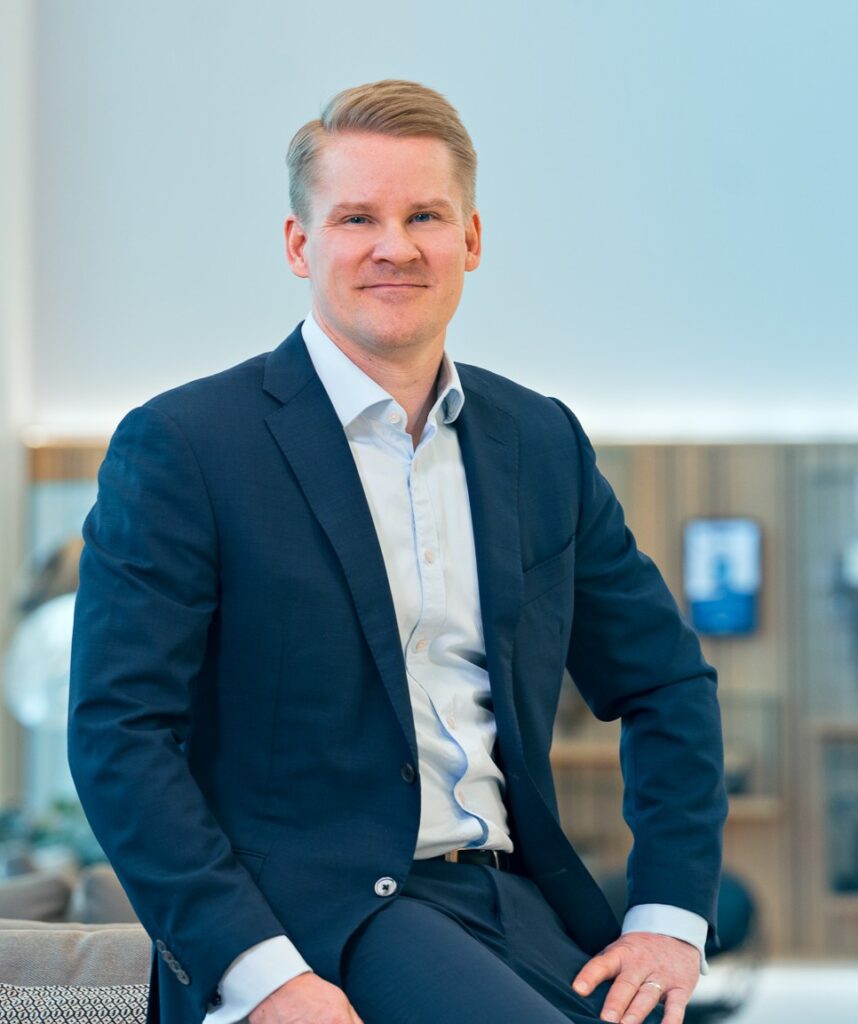
This time, we meet Toni Rönkkö, CFO at Ropo, whose career has taken him from global audit and advisory in financial services to leading the finance function of a Nordic technology company expanding across four countries. His journey highlights how strong technical expertise combined with a deep understanding of the business can shape effective CFO leadership.
Building the technical foundation
Most CFOs will tell you that understanding the industry and the business is essential for succeeding in the role. But to focus fully on the business, it helps to first build a strong foundation of the technical skills required in the CFO role.
“When you’re young, you need to do the homework and invest in getting your technical skills right,” he emphasizes. “It makes everything easier later on.”
That commitment to technical excellence took root at KPMG, where Toni started his career as an auditor in the financial services sector. Working with banks, insurance companies, and asset management firms, he earned his Chartered Accountant qualification in 2011 while learning what he calls ‘the culture of work’ at a leading audit firm.
“It was a good place to start. Coming to a culture where a group of youngsters with similar backgrounds – starting at the same time and competing for the same opportunities and promotions – really separated those who wished to advance and were willing to put in the work it required. If you did your job well, you got responsibility quickly, especially during uncertain times,” Toni reflects.
The financial services sector grew rapidly in the first decade of the millennium, creating sharp employee turnover – and suddenly, young professionals found themselves carrying significant client responsibilities. Working in a large multinational firm also opened doors to international collaboration, including being part of a team set up to digitalize audit processes across markets.
For Toni, KPMG sparked curiosity about what lay beyond audit work. “Those four years made me interested in exploring everything else that might be possible in a career,” he notes. “It was a great launch pad, and I still keep in touch with many people from that time.”
Diving deeper into the financial industry
After deciding to see the business from the client side, Toni moved to GreenStream Network, a Helsinki-based multinational asset management firm operating in an unusual niche: carbon markets and climate advisory. Working alongside passionate experts in the sustainability space reinforced an important lesson – that finding work where purpose and profession align is genuinely energizing.
From there, Toni moved to Front Capital, another asset management firm, where he held various roles – starting by leading the finance function. He noticed first-hand how heavily regulated licensed financial services businesses are. “It’s a special field and to be able to work in a company with license requirements – it requires specific expertise. Financial reporting compliance requirements and risk management procedures need to be in place just the same, regardless of how big or small your company is.”
His last years at Front gave him exposure to the emerging alternative investments landscape, meeting companies and start-ups with new technical platforms. But he was ready for something different. “In the financial sector the work was mainly around money and felt a bit abstract at times. I wanted to try working in a company that was doing something more concrete.”
Before joining Ropo, he had built the core toolkit every CFO needs: deep financial operations knowledge, international experience, and the ability to navigate regulatory complexity – supported by a strong work ethic.
Toni Rönkkö
Born: 1981
Current position: CFO, Ropo
Education: MSc (Economics), Accounting and Finance, Chartered Accountant (KHT)
CFO Experience: Since 2018
Previous experience: KPMG, GreenStream, Front Capital
Growing alongside Ropo
Toni joined Ropo as CFO in 2018 when the company only operated in Finland. What attracted him wasn’t just the role itself, but the growth trajectory ahead. “It felt like it matched exactly what I was looking for at that stage in my career,” he explains.
The company was on the verge of rapid growth with initial plans for international expansion, and it had financial services operations where Toni’s background was particularly relevant. Ropo’s leadership at the time was seeking someone who could bring both technical rigor and strategic partnership to the finance function.
“They were looking for someone who could come in with a good attitude and strong work ethic, and add value to the leadership team discussions,” Toni recalls. “The conversations with the CEO convinced me this was the right step.”

What followed was an intense first year that would test anyone: the company completed its first IFRS conversion, listed a bond on Nasdaq Helsinki, and went through an ownership change as the private equity owner initiated a sales process.
“I had to learn the business quickly. I put in a lot of hours to understand the fundamentals and the key metrics so we could build financial models and present the company to investors and other stakeholders,” Toni says.
From financial management to business leadership
In the early phase, the role was very hands-on – and without that strong technical foundation built earlier in his career, it would not have been possible to perform the work effectively. “Since then, my role has grown alongside the business – and today I can contribute much more to business development and strategic direction.”
Ropo’s transformation accelerated from 2019 onward, as the company expanded across the Nordics – first Sweden, then Norway during the pandemic in 2020.
The growth created opportunities Toni hadn’t anticipated, and his scope has evolved significantly as well. At various points, he’s led not just finance but also HR, IT, legal, compliance, and even the Finnish accounts receivable operation for a short while. Today, he oversees group finance, risk and compliance, and the data and business intelligence team – roughly 15–20 people across multiple countries.
“A CFO must have a comprehensive understanding of the business from all angles in order to fulfil the most important responsibility of the role: communicating clearly and transparently to stakeholders about financial performance, and building a bridge between operational activities and the numbers,” Toni explains.
The role has shifted from traditional financial management toward broader business leadership.
“Although each member of the management team has their own area of responsibility, we are expected to discuss all aspects of the business and contribute to its development. It’s a model that challenges us to keep learning every day.”

Leading through transparency
For Toni, effective leadership starts with finding people who combine relevant skills with the right attitude. “When I’m hiring, I look for two things: does the candidate possess the basic skills the role requires? And even more importantly, do they have the curiosity and drive to keep learning?”
“I try to hire people for positions where they’re not 100% ready yet – where there’s something to learn,” he explains. “I like that people get to develop in their roles. That creates really good motivation, and I think it shows in how they work.”
Once the right people are in place, Toni’s approach centers on creating psychological safety – an environment where people feel comfortable being honest, especially when things aren’t going well.
“If someone comes to me and says they made a mistake or something went wrong, that’s a good sign,” he explains. “It means they trust the environment enough to be open about it. That’s when we can actually solve problems together.”
The approach reflects one of Ropo’s core values: straight talk.
“We need to be able to discuss both successes and failures directly. Not knowing something yet isn't a problem. What would be a problem is not being curious about learning and developing.”
Managing a team spread across Finland, Sweden, and Norway brings added complexity – but beyond the logistics, Toni focuses on helping team members see the broader impact of their work.
“If people have a very narrow view of their work, it can easily become monotonous. But if they understand how their work contributes to the company’s overall goals – that understanding is really valuable and a strong source of motivation.”
Decisions based on data
On the topic of Ropo’s financial management, Toni shifts the conversation away from traditional metrics. “Financial indicators come second. First, we look at other business drivers and try to build a bridge to the financial ones.”
For Ropo, that means starting with customer relationships, volumes, and process efficiencies – customer satisfaction, retention rates, and transaction patterns. “The business has good potential to grow and be successful if your clients are happy,” he notes. “Then it’s about modelling the underlying business drivers to understand the financial outlook.”
Only after understanding these fundamentals does the analysis turn to financial performance – gross margins, EBIT, and client- or unit-level economics such as profitability per invoice. “We need to separate factors we can influence from those we can’t,” Toni explains. “When our results move in some direction, we need to understand whether it’s because of what we’re doing or because of changes in the external environment.”
Behind this analytical capability sits something valuable: Ropo’s massive dataset. “We have probably the most comprehensive invoice and payment data package in Europe, maybe even beyond. That gives us strong opportunities for data analytics and forecasting.”
This or That? CFOs Quick-Fires
Reporting or forecasting?
Forecasting, no question.
Short-term results or long-term building?
Long-term building.
Risk minimization or opportunity maximization?
Opportunity maximization.
Organic growth or acquisitions?
Organic growth.
On building a CFO career
What advice would he give someone building a CFO career? Toni returns to where he started: mastering the fundamentals.
“When you’re starting your career, invest in getting your technical skills right. It makes everything so much easier later on. You might need to practice during times when you’re not getting paid for it – just like in other areas of life. I did that myself, and I think it was a good investment.”
But technical mastery is only part of the equation. “Keep your mind open to many different options. Don’t just follow one single track,” he explains. “With a finance degree, you can do many different types of work. You don’t have to go into a company’s finance department and build your career that way. There are other interesting career paths available too. A combination of different experiences and skills creates versatility – and truly sought-after talent.”
Still, the most important thing is to understand the business where you work – it enables you to contribute to management team discussions, support business development, and communicate effectively with stakeholders.
There’s one more principle that guides his thinking about professional development. “Things that require you to stretch yourself are what develop you. If everything is easy, you probably haven’t developed much during that time. That’s how I see it.”
Ropo is the Nordic market leader and pioneer in invoicing technology, transforming the invoicing flow end-to-end. We help companies unify and streamline all invoicing processes to create a seamless workflow, providing full visibility, elevated customer experience, and improved control with a single overview. Committed to exceptional service and our one-platform strategy, we proudly support over 11,000 clients across Finland, Sweden, Norway, and Denmark.
This article is part of Ropo’s CFO Insights and Trends series, featuring expert perspectives, key trends, inspiring financial leaders, and more.
Subscribe to CFO Insights and Trends
Stay ahead in financial leadership
Subscribe for CFO insights, featuring Inside the CFO Office interviews with inspiring financial leaders and influencers that spotlight their insights on leadership, financial management, emerging trends, and future outlooks.
The CFO Insights and Trends newsletter is delivered straight to your inbox approximately six times a year, and you can easily unsubscribe at any time.

Read more
Insights & Trends
Inside the CFO Office: Toni Rönkkö, Ropo
Read more
News
How to Use MyRopo
Read more
News
How the Late Payment Process Works
Read more
Client stories